Beyond the Cable: Building the Digital Backbone for the Next Generation of the Americas.
- September 9, 2026
As AI, cloud and hyperscale infrastructure reshape digital traffic across the Americas, TAFS is building TAM-1 as more than a new submarine cable. Together with Ciena, the company is creating an open, scalable connectivity platform designed for the next generation of digital growth
Executive Interview Julio Bran, Chief Executive Officer, TAFS
Interview featured during Mexico Connect 2026
The digital infrastructure requirements of the Americas are changing rapidly.
AI workloads, cloud expansion, hyperscale data centers and increasingly distributed digital services are creating demand for more capacity, greater resilience and new connectivity options. Yet parts of Central America and the Caribbean continue to rely on infrastructure and routes built for a very different era of the Internet.
Trans Americas Fiber (TAFS) sees an opportunity to change that.
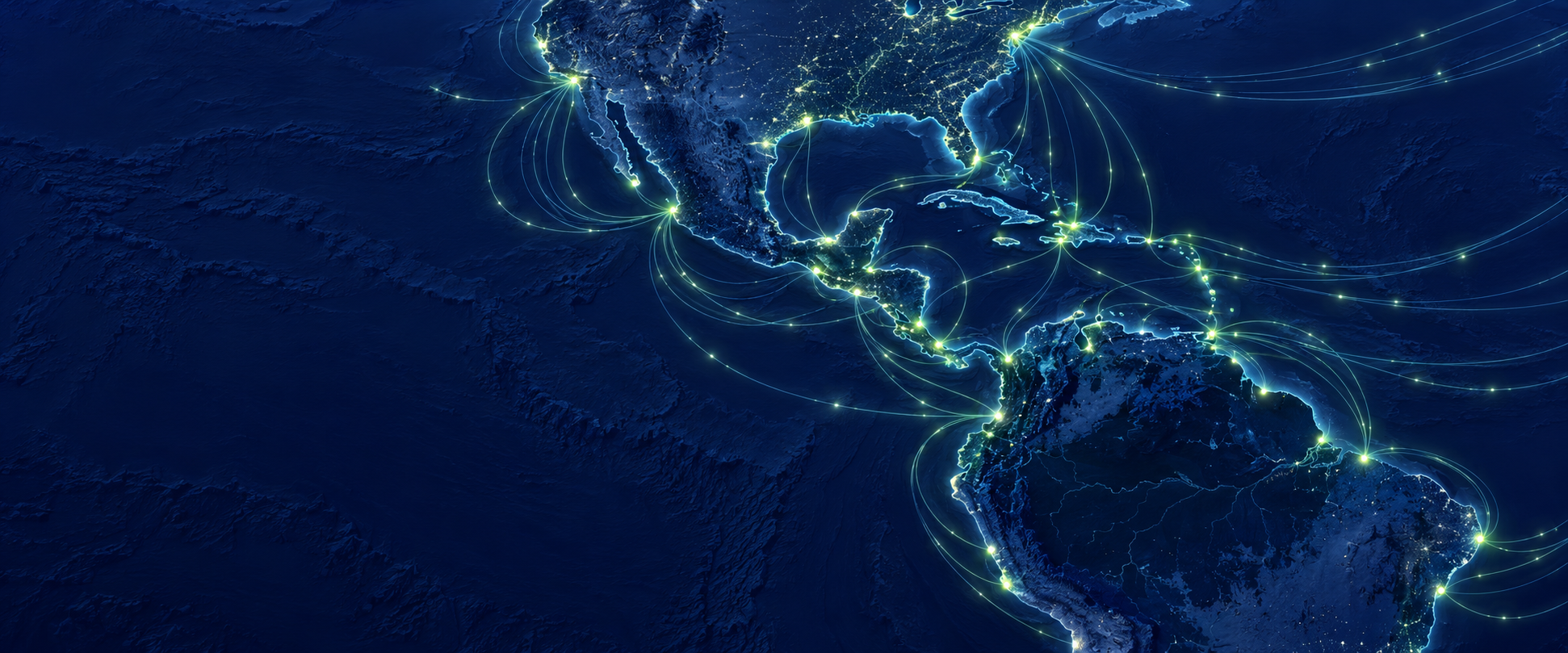
Its TAM-1 submarine cable system is being designed as a new connectivity foundation across the Americas, with more than 7,000 kilometers of subsea routes, 10 landing stations and approximately 800 Tbps of design capacity.
But the ambition extends beyond adding capacity.
Building for AI-era traffic—not yesterday’s Internet
One of the central ideas behind TAM-1 is that the infrastructure cannot simply be designed around today’s bandwidth requirements.
AI and cloud are changing both the scale and location of data flows. Networks increasingly need high capacity together with low latency, resilience and the ability to expand without repeatedly rebuilding the underlying infrastructure.
TAM-1 addresses this through new direct routes and an open, scalable architecture designed to allow capacity to increase as technology and customer requirements evolve.
The system incorporates 36 fiber pairs—24 on the southern system and 12 on the northern system—and multiple landing points and diverse routes connecting the United States, Mexico, Central America and the Caribbean.
For carriers, hyperscalers and other digital infrastructure players, that creates something particularly valuable: capacity headroom for what comes next.
From submarine cable to digital infrastructure platform
TAFS also wants to challenge the traditional model for accessing subsea infrastructure.
TAM-1 is being developed as a privately funded, carrier-neutral and open-access platform. Rather than limiting customers to a single connectivity model, TAF plans to provide access through options including dark fiber, shared spectrum, lit capacity and managed optical fiber network services.
This flexibility allows different types of customers—from carriers and hyperscalers to regional ISPs, enterprises and governments—to select the infrastructure model that matches their requirements and expand as those requirements change.
The implications extend beyond connectivity. New high-capacity and resilient routes can help create the conditions for further development of data centers, cloud services, edge infrastructure and localized AI infrastructure across the region.
In that sense, TAM-1 is the physical backbone. The larger opportunity is the digital ecosystem that can develop around it.
Resilience means having another way to get there
Capacity alone, however, is not enough.
Route diversity and resilience were fundamental considerations in TAM-1’s design. The system introduces new connectivity paths between the United States, Mexico, Central America and the Caribbean, providing alternatives to traditional corridors.
Greater route diversity can give operators more choice in how they connect markets and customers while strengthening the resilience of regional digital infrastructure.
Turning subsea capacity into scalable connectivity with Ciena
Delivering on that vision requires an optical architecture capable of scaling along with the opportunity.
TAFS selected Ciena’s GeoMesh Extreme architecture to help create a streamlined network design connecting submarine and terrestrial infrastructure while providing the flexibility to expand capacity as traffic grows.
The technology foundation includes WaveLogic 6 Extreme, advanced Submarine Line Terminating Equipment (SLTE) and Navigator Network Control Suite (NCS).
WaveLogic 6 Extreme brings advanced coherent technology to maximize capacity on available fiber, while Ciena’s SLTE optimizes optical performance across the submarine system. Navigator NCS adds network visibility and intelligent automation to help simplify operations and accelerate service delivery.
Together, these capabilities are designed to enable TAF to scale connectivity as demand from cloud, AI, content and other digital services grows.
Technology performance was not the only consideration. TAF also highlights Ciena’s ability to support aggressive deployment schedules.
TAM-1 is the starting point
The longer-term ambition extends well beyond the first system.
TAFS is already looking toward TAM-2, which is intended to extend connectivity from Panama toward the Pacific side of South America, including Colombia, Ecuador, Peru and Chile, alongside potential further expansion across the Caribbean.
The larger vision is an increasingly interconnected digital ecosystem across the Americas in which submarine infrastructure enables not only more bandwidth, but also new investment in cloud, data centers, edge infrastructure and AI.
As connectivity becomes increasingly critical to economic growth, the opportunity is no longer simply to connect one location to another.
It is to create the infrastructure platform on which the next generation of the digital Americas can be built.



Renewing Connectivity Across the Americas
Resources
Contact Us
Copyright 2026, Trans Americas Fiber. All Rights Reserved.
- Terms of Services
- Privacy Policy
Renewing Connectivity Across the Americas
Contact Us
Copyright 2026, Trans Americas Fiber. All Rights Reserved.
- Terms of Services
- Privacy Policy